The Dream Departs: Sidney to Bamfield. Nine days on the threshold of the Pacific
Pacific Passage 2026
Endless Song — Pacific Passage 2026 | May 21–29, 2026 .
The beginning.
There are moments in a long preparation when the act of leaving is almost anticlimactic. You've been readying the boat, readying yourselves, readying your minds for so long that the final casting-off of lines feels like just another item on the list. And then you're in the water, moving, and Westport Marina is behind you, and it becomes something else entirely.
May 21st, 2026. We left at last. The destination was Cadboro Bay, barely 10 nautical miles away — hardly a departure in the heroic sense. We filled the diesel tanks to the brim for the first time since we'd owned the boat, raised the sails in a tentative 5 knots that built briefly to 10 and then died to nothing, and motored against current through Baynes Channel — 3 knots of current against us, swirling, testing our patience and our boat handling. By evening we were anchored in 15 feet of water off the Royal Victoria Yacht Club, watching a flotilla of Laser dinghies practice manoeuvres around our bow.
"Sitting here on the cusp of starting a voyage that began in a dream as a child. Reading the stories of Captain Cook, climbing Roseberry Topping in Yorkshire with my dad, and now about to sail off into such historical regions. It's quite an impossible dream but it's about to come true."
Colin paddled his kayak out to say farewell. He brought flowers from his garden. It is, in retrospect, the perfect beginning to an adventure — not with fanfare, but with flowers and a gentle anchorage and the sound of racing dinghies. There are superstitions about boats and flowers, but we felt they were a good portent for us as our farewell to Victoria. Thank you Colin.
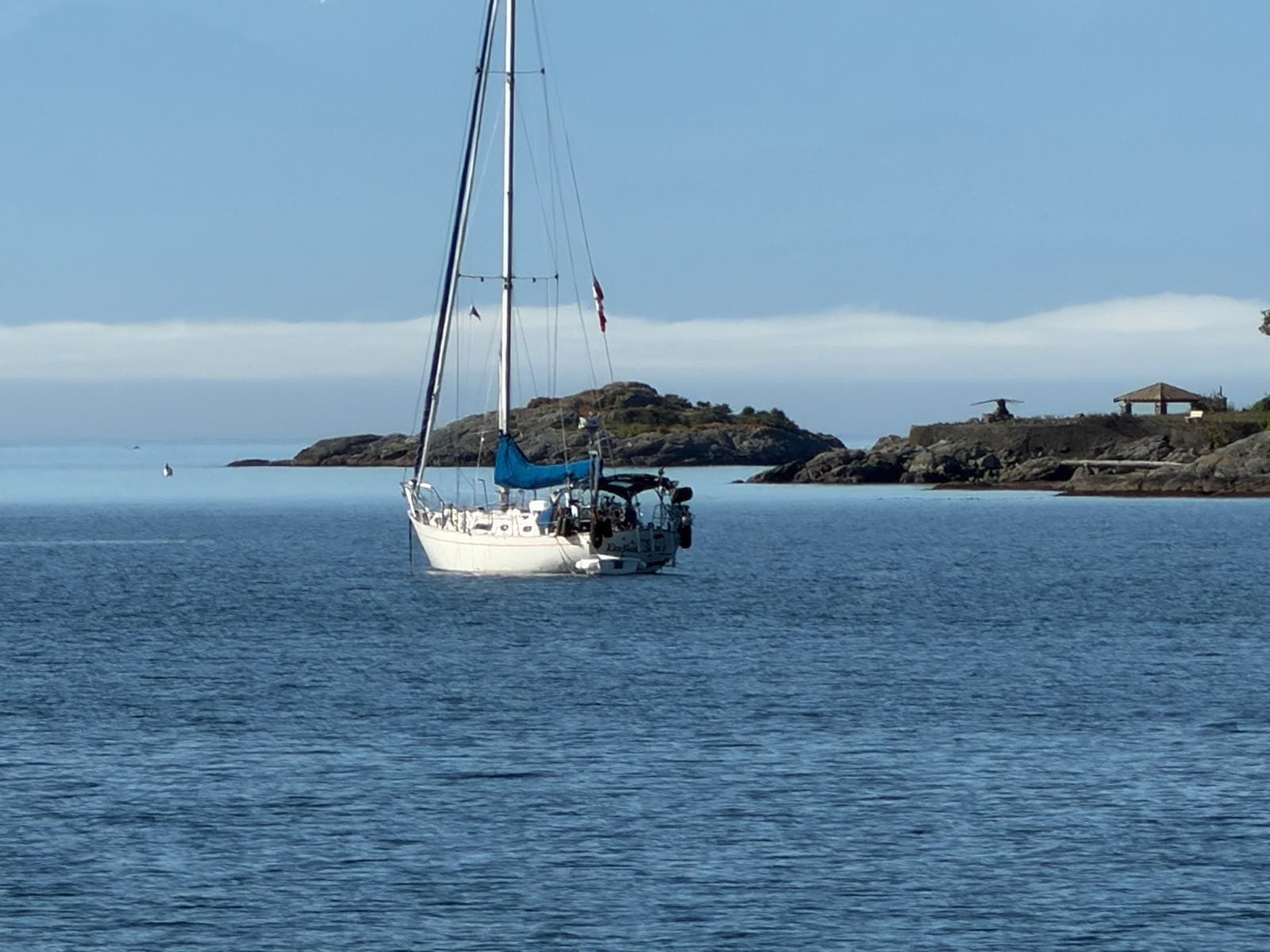
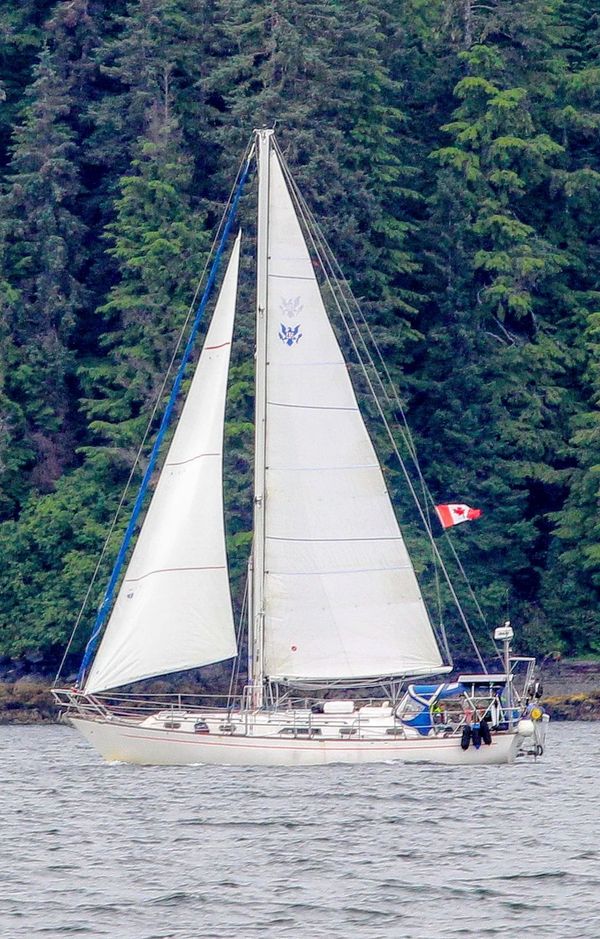
Peter Vivian took this photo of us from the beach at Cadboro Bay on his morning bike ride — the photograph he sent shows Endless Song anchored and peaceful. We are grateful to him for it.
May 22 — First Blood on the Pacific Swell
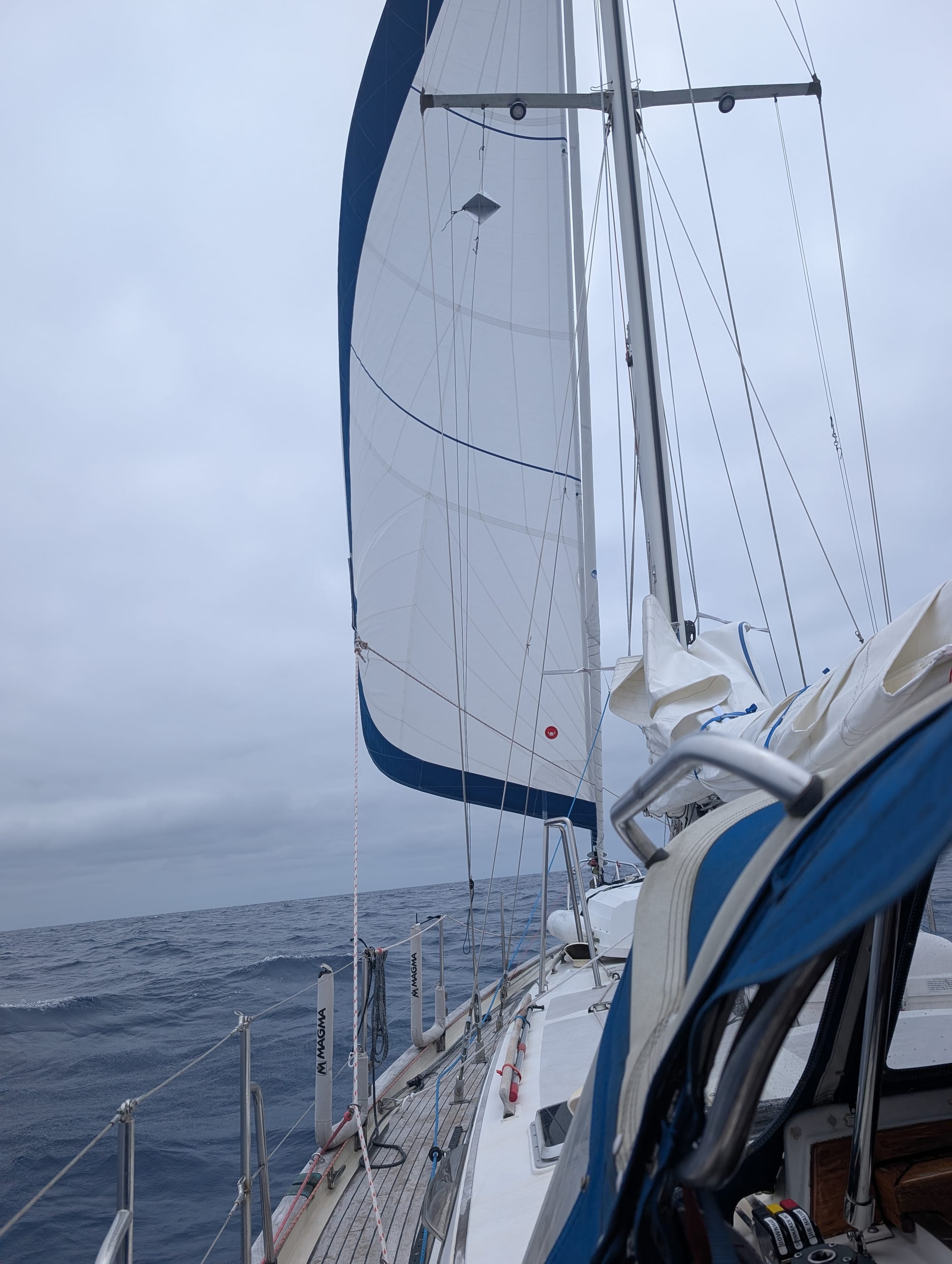
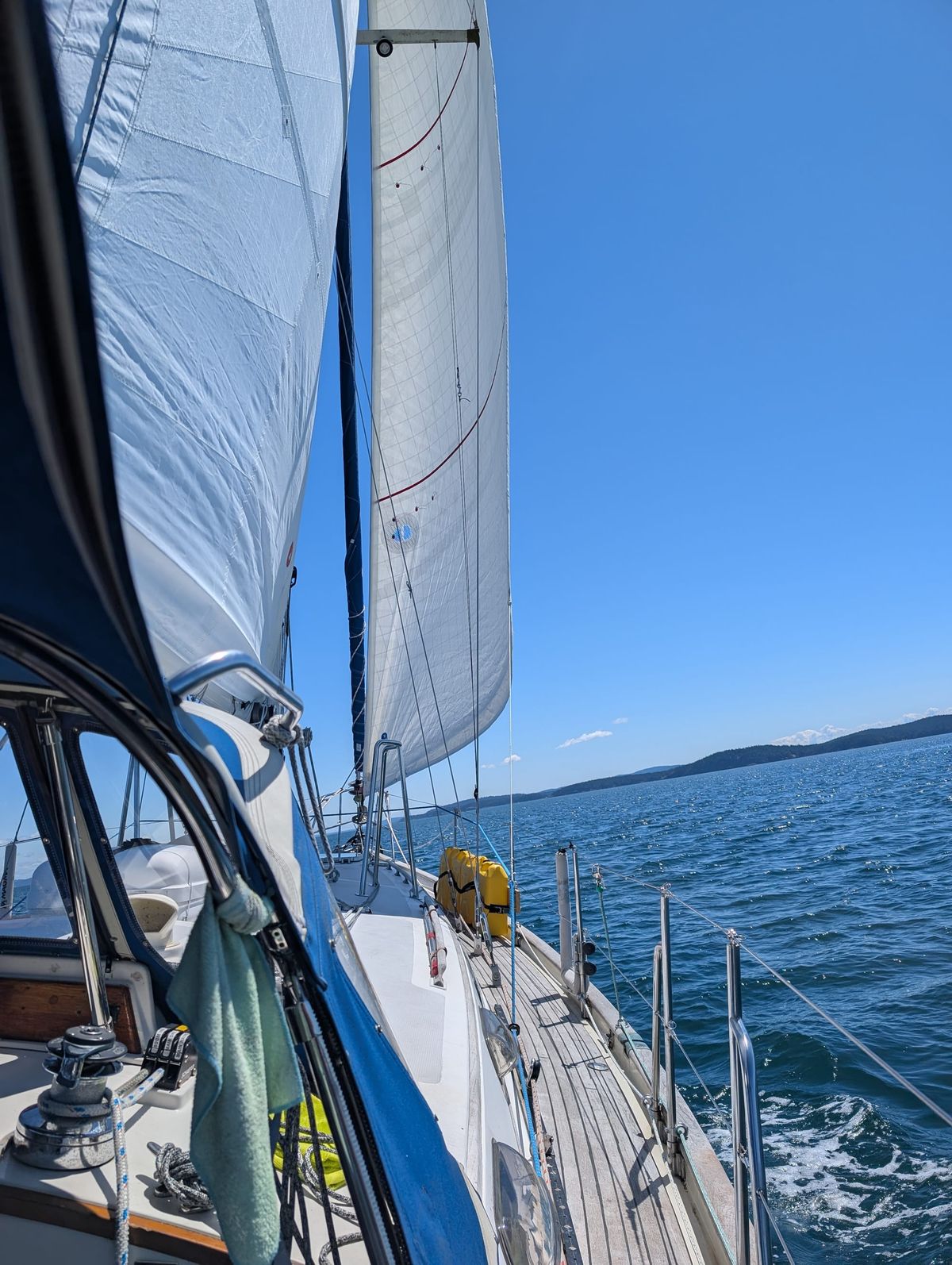
The forecast said 12 to 16 knots. The forecast was right. We tucked in a reef, bore away down the Strait of Juan de Fuca, and spent the day tacking upwind into a chop that was modest by any offshore standard but felt — after months on the dock — like a proper introduction to what lay ahead.
5 knots boat speed, 7.2 knots over the ground. A good current with us, a cold wind in our faces. By evening we were anchored in Sooke Inlet, next to the boardwalk, the boat settled and the crew decidedly chilly but quietly satisfied.
May 23 — The Swiftsure Interlude

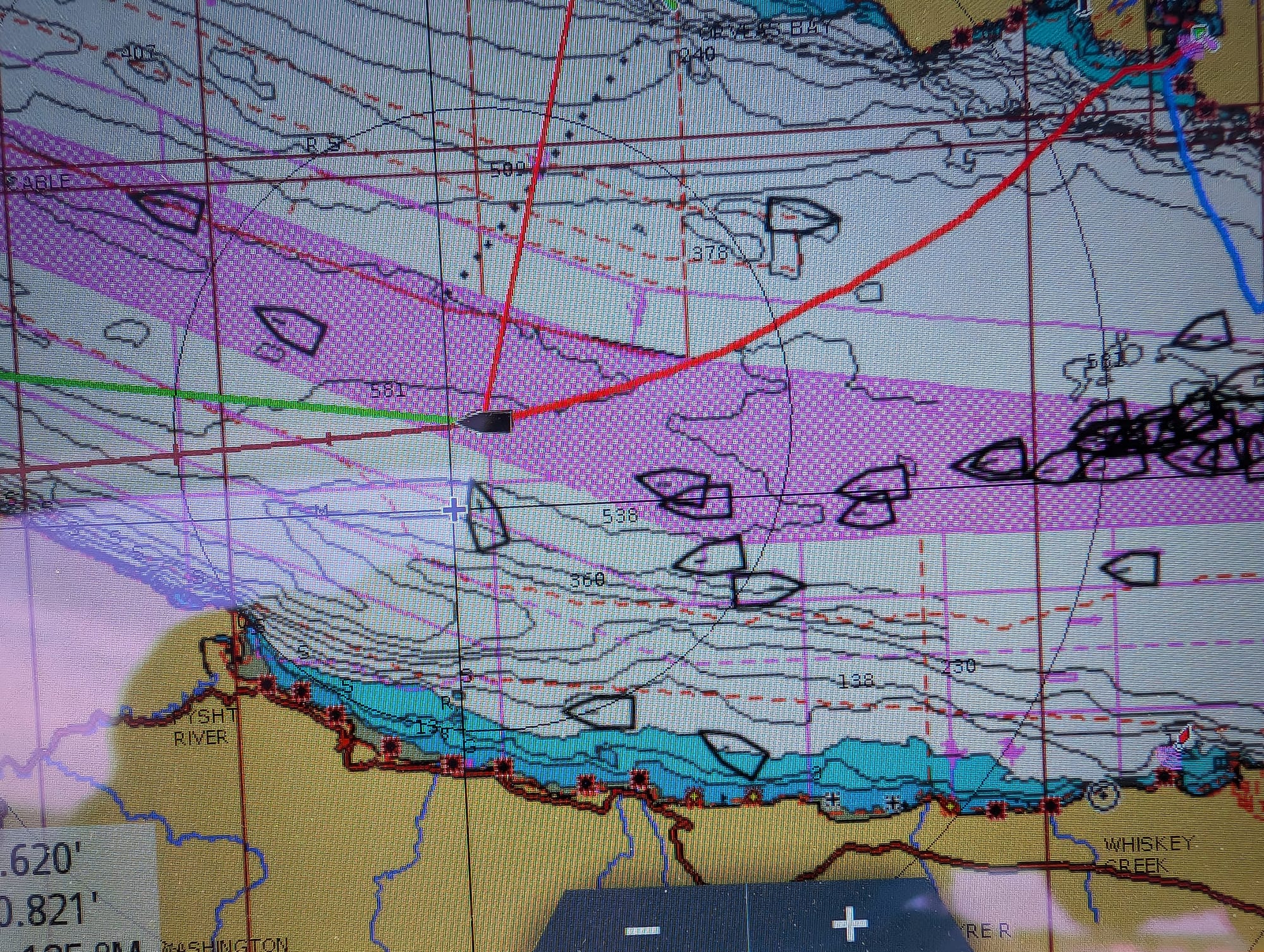
We had not planned to sail the Swiftsure Race. The race, however, had other ideas. The annual Swiftsure offshore race from Victoria brings dozenss of boats funnelling down the Strait of Juan de Fuca toward the open Pacific. We left Sooke in the morning into 20 knots, gusting 30 — two reefs and the small jib — and found ourselves in the middle of the fleet. The race boats were doing 10 knots. We were doing 5. They were extremely beautiful and extremely fast and they appeared to have no particular interest in our right of way. Hana Mari passed just astern of us at 8 knots. We gybed clear of the fleet before things became complicated.
"It was a great day's sailing. We learned that we can sail this boat in these conditions. She is very stable, very capable, and will survive better than either of us."
Nearly 58 nautical miles in 11.5 hours. Waves to 3 metres, confused and steep in the shallower water near Port Renfrew. Cold — Darrell was colder than either of us had been in Alaska. We discovered the sink in the head had become a geyser, sea water pressuring back up the outlet with every plunge of the bow, soaking the entire compartment. The seacock was closed. Lesson noted.
Our aspirational goal had been Bamfield. Port Renfrew was the reality, and a very welcome one. We tied to the dock, ran the heater, ate an enormous meal, and were asleep before we'd finished cleaning up.
May 24 — A Pause at Port Renfrew
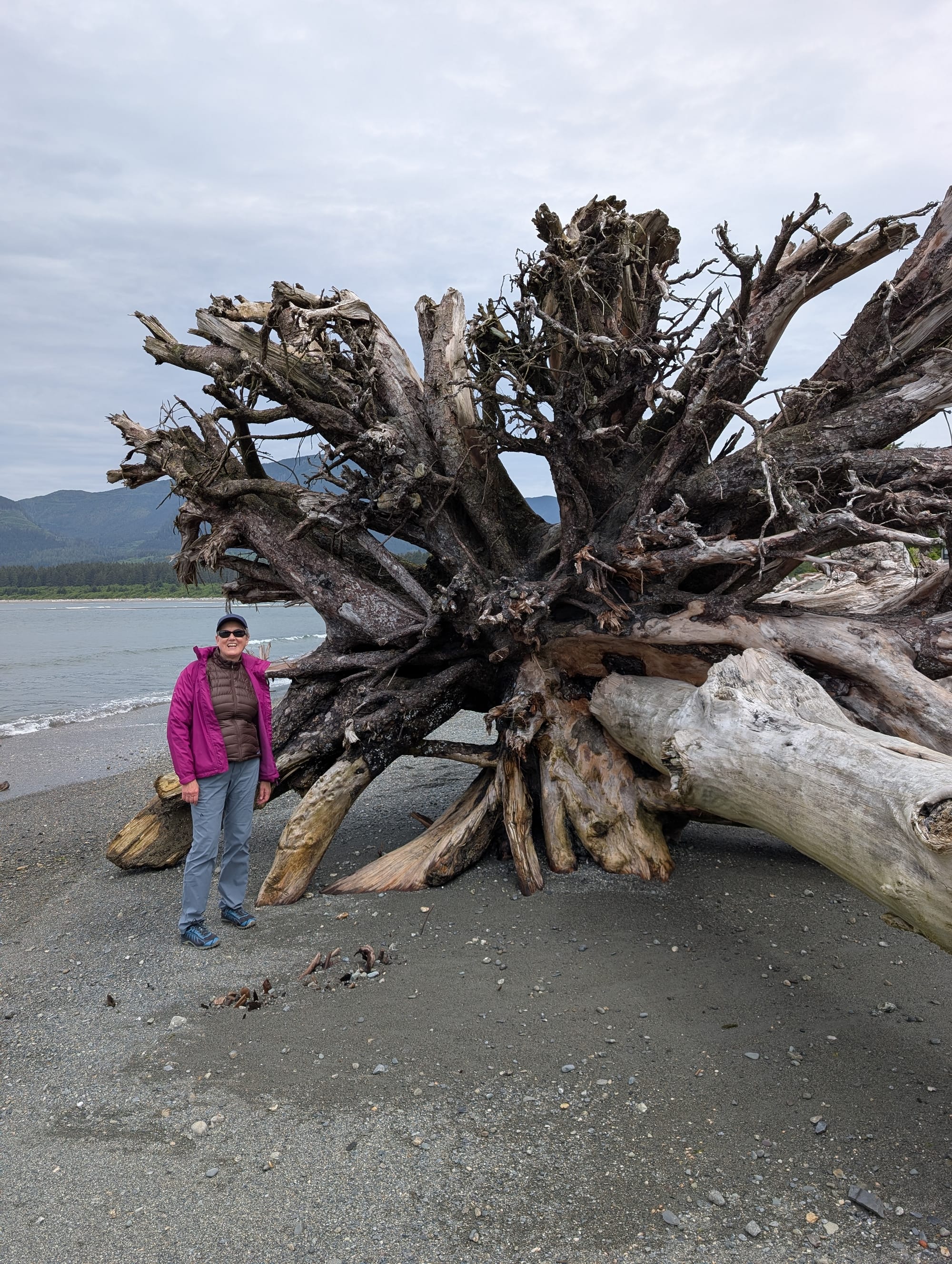
Ancient root balls on the beach at Port Renfrew — trees from another era
The forecast for the following day was uninviting — light and variable, which in practice means confused seas left over from the previous two days' wind. We made the sensible decision: stay put, rest, and sail on the next day's more favourable window. Port Renfrew rewards a slow look. A beach walk produced the extraordinary sight of enormous ancient root balls — remnants of trees of a scale the current forest hasn't yet reached, toppled and half-buried in the sand, their root systems splayed like sculpture. They put geological time in perspective in a way that suits two retired geologists. We were rested. The boat was drying out. Tomorrow we would make Bamfield.
May 25 — Bamfield at Last
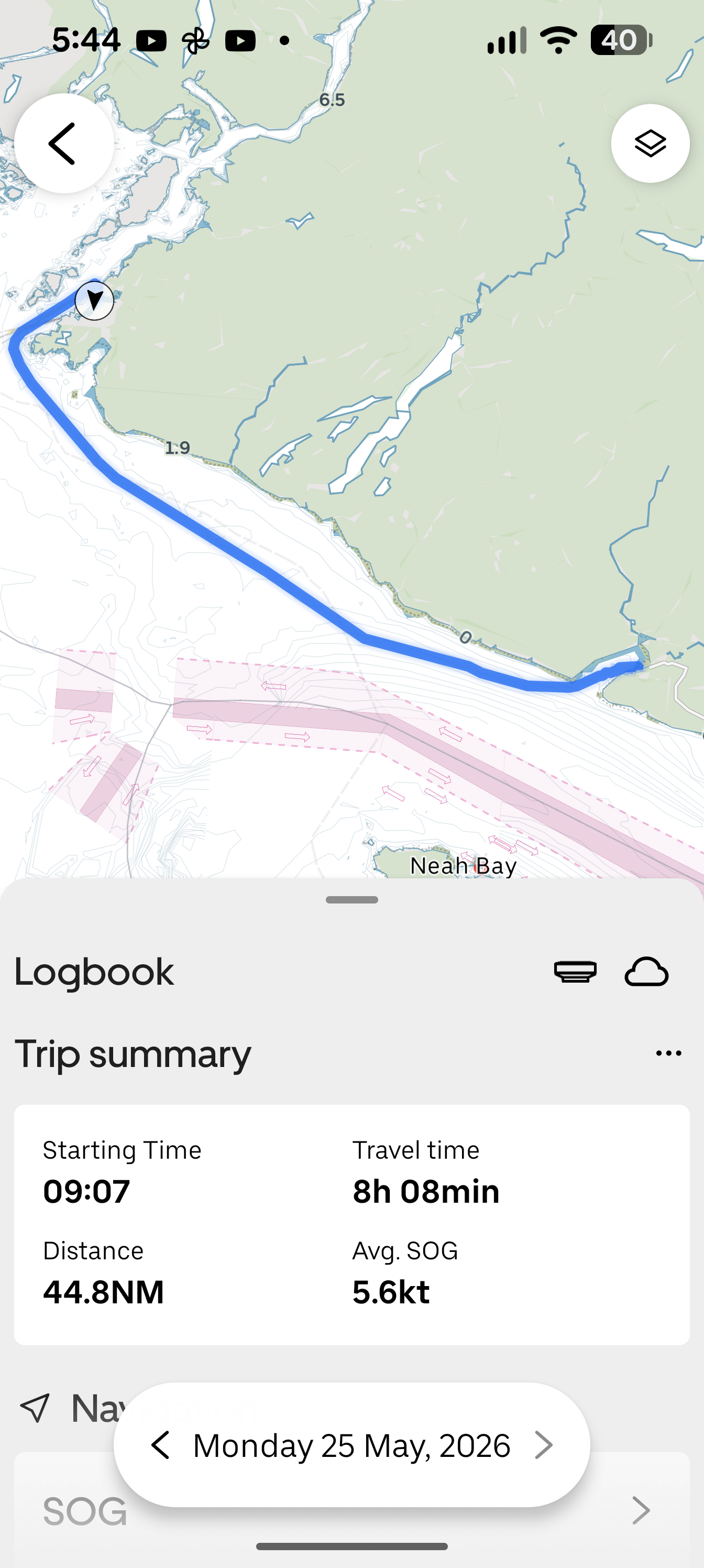
The forecast 12 to 15 knots from the southeast didn't appear until Cape Beale, an hour from Bamfield. Before that: flukey 3 to 7 knots, 4-metre confused swell left by the previous days, drizzling rain, and a coastline spectacular enough that we stayed 2 nautical miles offshore out of simple respect.
Cape Beale itself played a visibility game — one moment sharp and clear, the next swallowed entirely by swell and mist, reappearing again just when you'd started to doubt your chart. Coming down Trevor Channel, surfing the waves, the speed readout oscillated between 4 and 8 knots in the space of seconds.
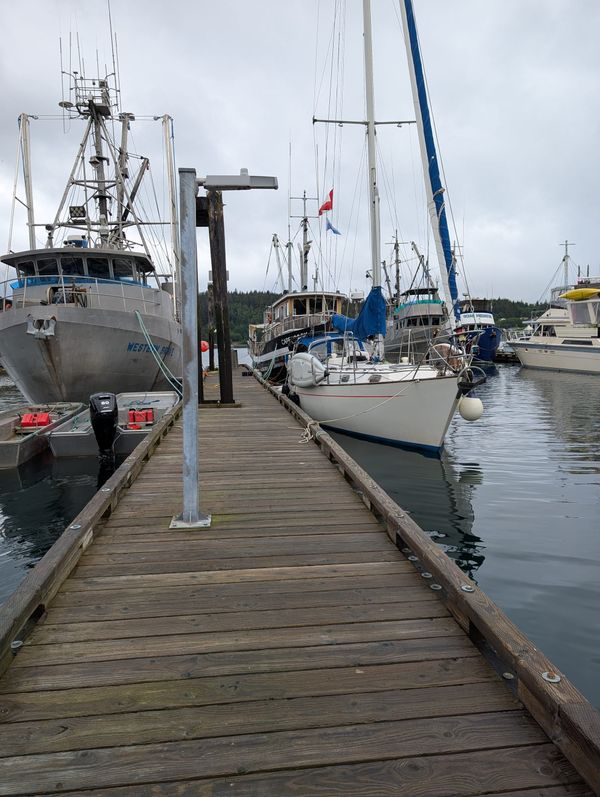
Bamfield was larger than expected. Prettier, too. We tied to the dock at the small marina, stepped ashore, and felt the particular lightness that comes from making a destination safely.
May 26–27 — Exploring Bamfield
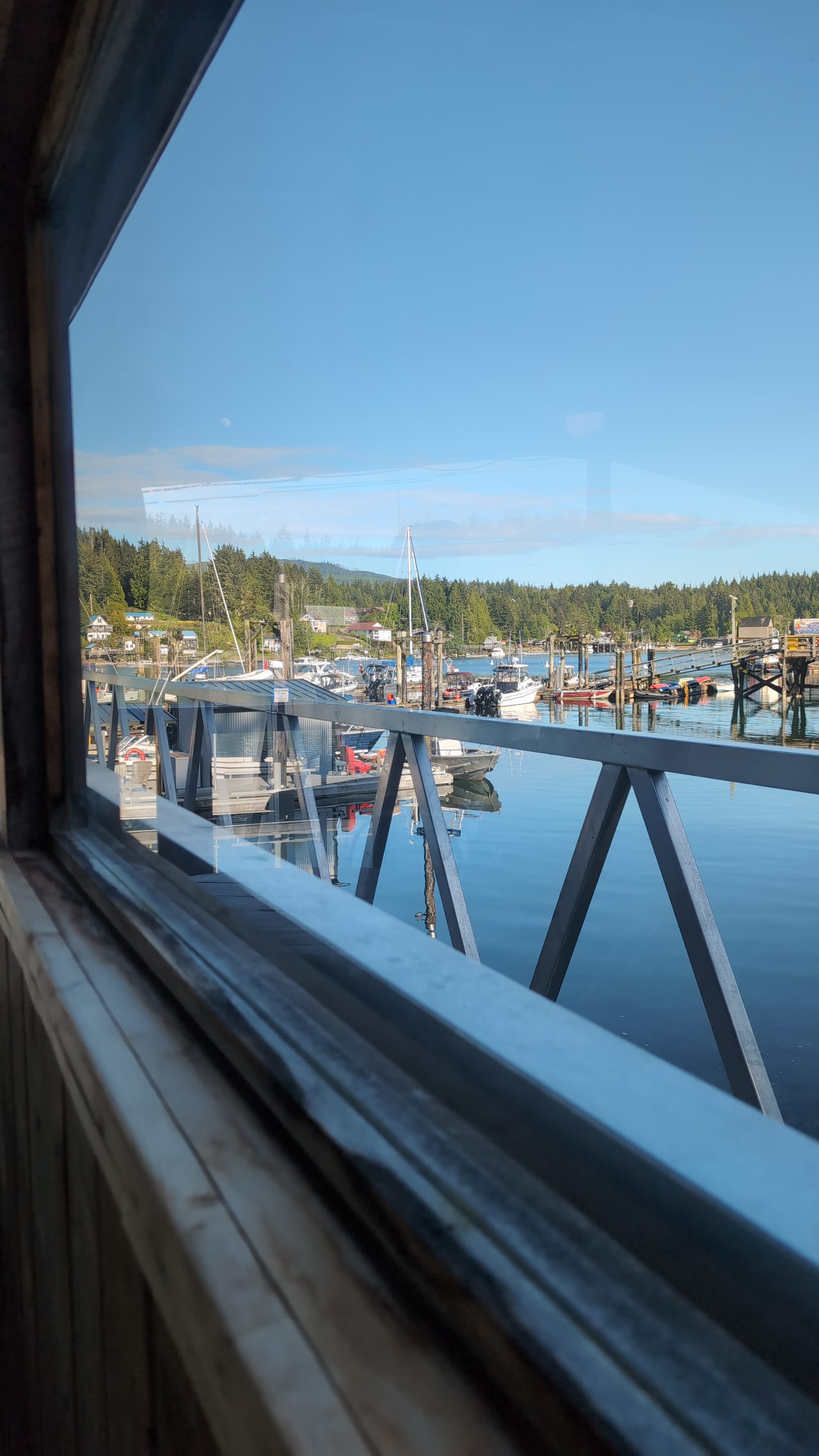
Bamfield divides itself between east and west sides of the inlet, connected only by water taxi or dinghy. The west side — where we were tied — has the boardwalk, the small but well-stocked shop (which has, we noted approvingly, a genuinely good whisky selection), a couple of surprisingly good restaurants, and some lovely walks to beaches where real Pacific swells arrive unimpeded from Japan.
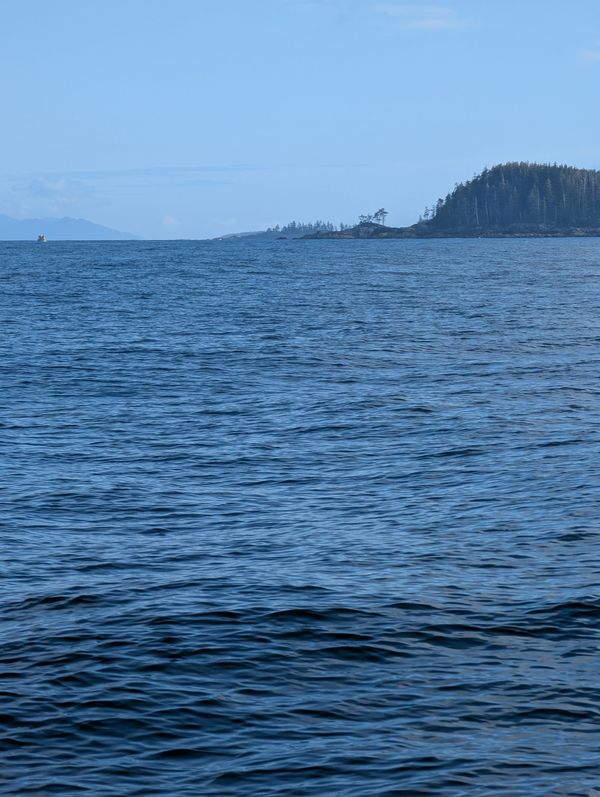
"Bamfield might be a good option for anyone looking for an interesting place to visit. Probably as nice, if not nicer, than Tofino — and for now, not as well known." Exploring the islands off Bamfield— mist rolling in from the Pacific We spent a day exploring the outer islands — rocky islets draped in kelp, the mist rolling in from the Pacific in long curtains. Had we brought the kayaks it would have been hours of happy exploration. As it was, we anchored and watched and considered ourselves fortunate to be where we were.
The dock was modest — no rubbish drop, no heads, tight for space — but the harbour itself and its surroundings more than compensated. SV Gandalf, on the dock with us, had dragged their anchor in strong wind two nights before our arrival. We noted the holding and stayed on the dock. We also repositioned the Canadian ensign from the backstay to the radar pole. The backstay had never felt right. The radar pole does.
May 28–29 — Watching the Weather
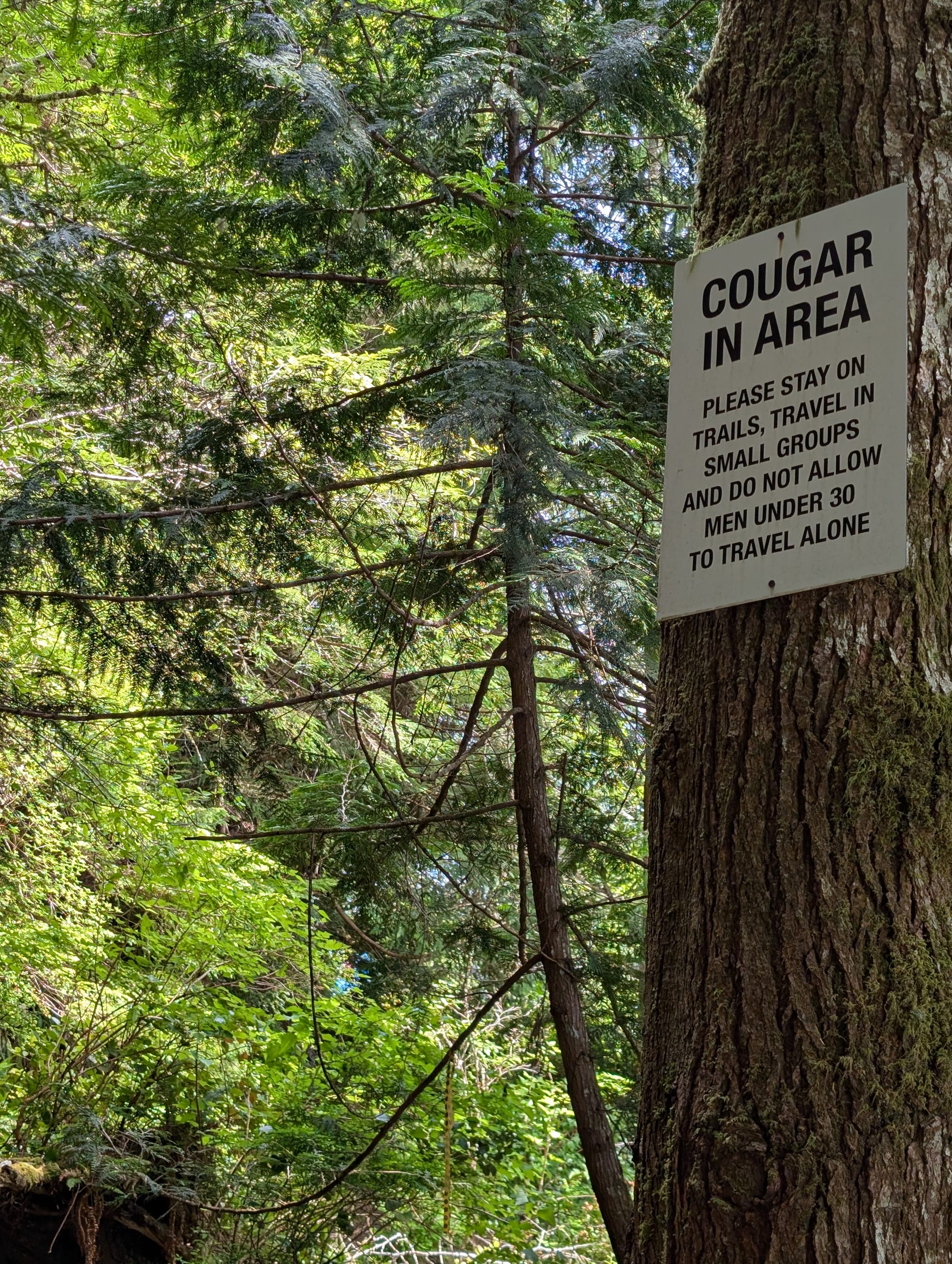
"Beware the cougars" — a sign along the Bamfield boardwalk
The final days in Bamfield were a study in patience — something every offshore passage demands before it has officially begun. We studied PredictWind routing outputs, consulted GRIB files, and watched the barometer. We'd hoped to leave on the 29th. The swell and wind didn't reduce as quickly as the previous day's forecast had suggested. We pushed the departure to the 30th. We are not sailing to a schedule.
"It's a waiting game. We are not sailing to a schedule. So we'll be patient and now plan to set off tomorrow."
The waiting time was productively spent. We re-installed and Hydrovane rudder. The hydrovane is our third crew member for the Pacific, christened 'Hydro.' A windvane steers using wind power alone, requiring no electrical draw. On a 3,800-nautical-mile passage, the energy savings are significant. Hydro would earn his keep.
We walked the boardwalk again. We read. We ate well. We thought about what was coming. 3,800 nautical miles. French Polynesia. The trades. The equator.
A dream that started on the North York Moors with a father and his son and the stories of Captain Cook. On the morning of May 30th, 2026, we slipped the lines at Bamfield and turned south-southwest into the Pacific. The adventure that had been a dream for sixty years had finally, properly, begun.